
Wildlife disease
Abnormal health condition affecting wild animal species.

USFWS Mountain Prairie · Public domain
When a wild animal suffers from an abnormal health condition, it is considered a wildlife disease. Infected wildlife often act as reservoirs, meaning they can carry and spread illnesses to domestic animals, humans, and other species. These diseases move from one animal to another either through direct contact between individuals or indirectly via the environment. Human activities, particularly the wildlife trade, have opened up new pathways for diseases to jump between species that would not normally meet.
To understand wildlife disease, scientists use the Epidemiological Triad Model, which examines the interplay among three factors: the pathogen, the host, and the environment. A pathogen can infect a susceptible host through various routes. Once infected, that host becomes capable of passing the disease to others. Meanwhile, environmental conditions influence how long a pathogen survives and how it spreads, as they affect host movement and interactions with different species.
A real-world example of this triad is Lyme disease. Changes in the environment have shifted where Lyme disease and its tick vector (the Ixodes tick) are found. The recent rise in wildlife disease outbreaks worries conservationists, because many vulnerable species lack the population numbers needed to bounce back from severe epidemics.
**Transmission**
**Indirect** Wildlife can pick up pathogens indirectly from their surroundings—by eating contaminated food or water, breathing polluted air, or coming into contact with infectious urine or feces from a sick animal. This kind of transmission is common for pathogens that can survive for long stretches, with or without a living host. Prion diseases are a well-known example of indirect spread. Prions linger in the environment for months after being released through an infected animal’s urine or feces. Notable animal prion diseases include chronic wasting disease in deer and elk, scrapie in sheep and goats, and various forms of spongiform encephalopathy, such as bovine (mad cow disease), mink, feline, and ungulate forms.
**Direct** Disease can pass directly from one animal to another through contact with infected blood, mucus, milk (in mammals), saliva, or sexual fluids like vaginal secretions and semen. A striking example is facial tumor disease in Tasmanian devils. During breeding season, these marsupials repeatedly bite each other in t
- field
- Epidemiology and Conservation Biology
- known_for
- Acting as a reservoir for zoonotic diseases and threatening vulnerable species through outbreaks
- key_concept
- Epidemiological Triad Model (pathogen, host, environment)
- transmission_types
- Direct contact, indirect environmental exposure, wildlife trade
- notable_examples
- Lyme disease, chronic wasting disease, devil facial tumor disease, COVID-19
Lore & Background
Wildlife disease is understood through the Epidemiological Triad Model, which describes the relationship between a pathogen, host, and the environment. There are many routes to infection of a susceptible host by a pathogen, but when the host becomes infected, that host now has the potential to infect other hosts. Environmental factors affect pathogen persistence and spread through host movement and interactions with other species. An example is Lyme disease, where changes in environment have changed the distribution of Lyme disease and its vector, the Ixodes tick.
Reader's Guide
Wildlife disease management serves to protect not only the animals at hand but also the delicate equilibrium that favors ecosystems and the planet's health. Human impact has put in place both direct and indirect pathways of propagating disease through wildlife populations, including habitat destruction, climate change, and the increasing footprint of humans in landscapes formerly reserved for wildlife. Modern approaches include vaccination, such as oral rabies vaccination programs among raccoons and foxes, and culling, which is controversial. Surveillance and early detection using Geographic Information Systems and genetic sequencing are crucial for preventing outbreaks. The COVID-19 pandemic highlighted the importance of international participation among organizations such as the World Health Organization, the Food and Agriculture Organization, and wildlife organizations in dealing with zoonotic diseases.
Did You Know?
- Prion diseases, such as chronic wasting disease in cervids, are indirectly spread due to their longevity in the environment, lasting for several months once released from a host via excretions.
- Devil facial tumor disease in Tasmanian devils spreads through direct contact via biting during the breeding season, transmitting through blood and saliva.
- The most notable example of wildlife trade impacting both animal and human health is COVID-19, originating in a wet market in Wuhan, China, though the originating species remains debated.
- Oral rabies vaccination programs among raccoons and foxes have proved valuable in controlling rabies in some wild animal populations in the United States and Europe.
Discovery and Geographic Expansion
CWD first surfaced in 1967 when researchers at a government facility in northern Colorado noticed mule deer exhibiting a puzzling wasting pattern. For over a decade, the condition was catalogued simply as a clinical wasting syndrome before scientists in 1978 confirmed its true nature as a transmissible spongiform encephalopathy. Since that reclassification, the disease has proven remarkably persistent and far-reaching. Today it has been documented in both wild and captive populations across thirty-three U.S. states and five Canadian provinces, affecting mule deer, white-tailed deer, red deer, sika deer, elk, caribou, and moose. The geographic footprint has also crossed international borders: a wild reindeer herd in Norway tested positive in March 2016, single moose cases appeared in Finland in 2018 and in Sweden in 2019 and 2020, and a Minnesota red deer farm reported an outbreak. South Korea identified the agent in deer imported from Canada, underscoring how trade and migration can carry the pathogen to new regions.
Clinical Progression and Behavioral Collapse
Once a deer or elk is exposed to the CWD agent, the disease typically remains silent for eighteen to twenty-four months before symptoms emerge, which is why the youngest animal ever recorded with clinical signs was fifteen months old and most cases strike adults. The progression is relentless and invariably fatal. Early indicators center on motor difficulties, but the hallmark that observers most consistently note is a steady, visible loss of body weight over time. As the condition advances, animals display a constellation of neurological and behavioral disturbances: they withdraw from herd-mates, appear listless, lower their heads, tremble, and fall into repetitive circling patterns. Excessive drooling and audible teeth-grinding are common, while increased water intake and urination further signal the body's struggle. A striking and unsettling sign is the loss of natural wariness toward humans, often accompanied by an air of confusion. The Animal and Plant Health Inspection Service distilled the full clinical picture into a concise sequence: behavioral changes, emaciation, weakness, ataxia, salivation, aspiration pneumonia, and ultimately progressive death.
Prion Biology and Genetic Vulnerability
At the molecular level, CWD is driven by a prion — a misfolded variant of the normal cellular prion protein (PrPC) that normally resides in the central and peripheral nervous systems. The pathogenic form, designated PrPSc, acts as a template that converts healthy PrPC molecules into additional copies of itself, triggering an exponential chain reaction. The genetic blueprint for this protein is encoded by the PRNP gene, a sequence so highly conserved across mammals that it has been successfully identified and sequenced in deer. Accumulation of PrPSc in brain tissue correlates with widespread neurodegeneration, and the protein's physical properties make it extraordinarily stubborn: it is insoluble in all but the strongest solvents and highly resistant to protease digestion. Genetic variation within the PRNP gene significantly shapes an animal's susceptibility. In elk, individuals homozygous for leucine at codon 132 appear to resist clinical disease, while those carrying methionine variants face markedly shorter incubation periods. In white-tailed deer, polymorphisms at codons 95 and 96 influence both the pace of progression and the specific prion strain that takes hold.
Cross-Species Risk and the Human Question
Although CWD has never been definitively confirmed as transmissible to humans or livestock, the question of zoonotic potential has grown increasingly urgent. A 2004 CDC study called for continued epidemiological and laboratory monitoring, and a 2019 follow-up explicitly acknowledged that the potential for human transmission and subsequent disease exists. As a precaution, public-health guidance advises hunters to avoid consuming brain, spinal cord, eyes, spleen, tonsils, and lymph nodes from animals in CWD-identified areas. Experimental work has demonstrated that the agent can cross species barriers in squirrel monkeys and humanized mice. The most alarming development came in April 2024, when two men from the same hunting group were diagnosed with Creutzfeldt–Jakob disease, prompting researchers to speculate that consumption of CWD-positive venison may have been the vector. A related 2022 case involved a seventy-two-year-old man who died within a month of presenting with confusion and aggression after a friend's CJD death; although his diagnosis was classified as sporadic CJD, investigators stressed that cross-species transmission remained plausible and could not be excluded from the cluster.
Gallery
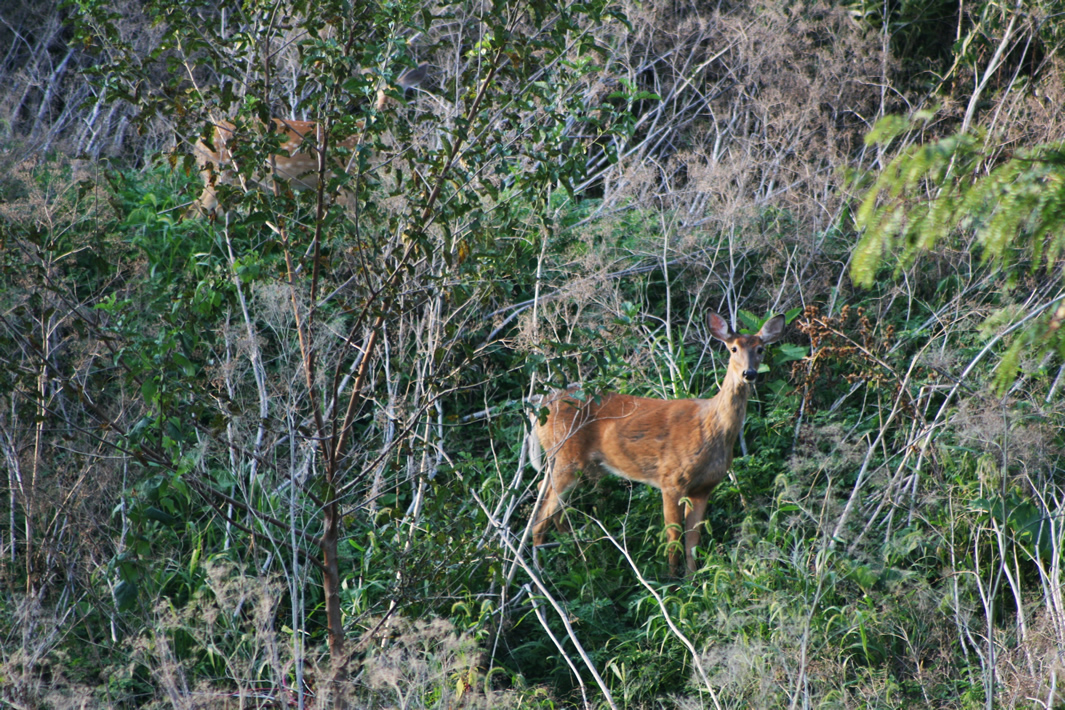
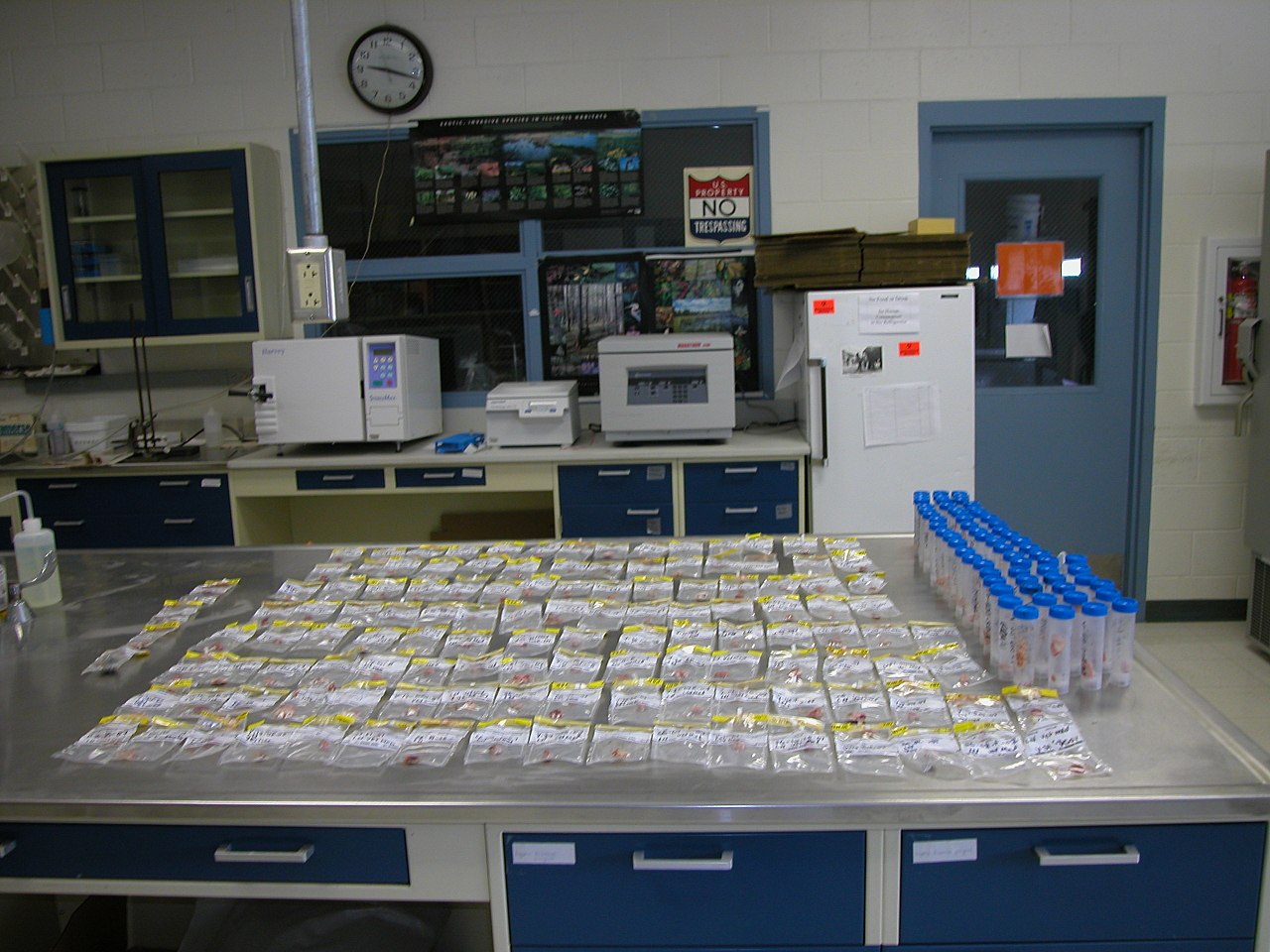
Frequently Asked Questions
What exactly is a Wildlife disease?
A Wildlife disease is any abnormal health condition that affects a species living in the wild. It covers a broad range of infections and disorders seen in non-domesticated animals across ecosystems.
Why do Wildlife diseases matter to humans and other animals?
Infected wild animals frequently serve as reservoirs, harboring pathogens that can jump to domestic livestock, people, or other wildlife. This makes them a central concern in both conservation biology and public health.
How do Wildlife diseases spread between animals?
Transmission can happen through direct physical contact between individuals, indirect exposure to contaminated environments, or via human-driven pathways like the international wildlife trade that brings normally isolated species into close proximity.
What model do scientists use to analyze Wildlife disease outbreaks?
Researchers rely on the Epidemiological Triad Model, which frames every outbreak around three interacting components: the pathogen, the host, and the surrounding environment. Understanding how these three elements shift helps predict and manage disease dynamics.
Which well-known examples fall under the Wildlife disease category?
Notable cases include Lyme disease, chronic wasting disease in deer and elk, devil facial tumor disease in Tasmanian devils, and the spillover events linked to COVID-19. Each illustrates how a pathogen can destabilize a wild population or cross into human communities.
More in Animal diseases 1-24
Spotted an error? Know more?
This is a living reference — every entry is fact-audited, and reader corrections feed straight into our audit queue. Suggest an edit · See this site's audit record